
Fasting Triglycerides: Optimal Levels for Longevity, Metabolic Health, and Energy Optimization
BIOMARKERS
5/5/20263 min read
Introduction: Why Triglycerides Matter More Than You Think
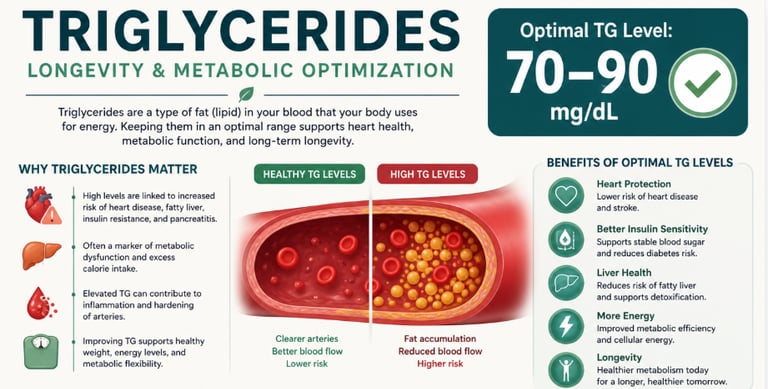
Triglycerides (TG) are the primary form of fat circulating in your bloodstream. They serve as a critical energy substrate, but chronically elevated levels are strongly linked to atherosclerosis, insulin resistance, and cardiovascular disease (CVD).
From a longevity and performance standpoint, fasting triglycerides are not just a biomarker—they are a metabolic efficiency signal. Lower levels typically reflect better mitochondrial function, improved lipid oxidation, and lower systemic inflammation.
What Are Fasting Triglycerides?
Fasting triglycerides are measured after an 8–12 hour fast, representing baseline lipid metabolism without recent dietary influence.
They originate from:
Hepatic synthesis (de novo lipogenesis)
Adipose tissue lipolysis
Dietary fat (postprandial remnants)
Elevated fasting TG reflects metabolic dysfunction, particularly impaired clearance of triglyceride-rich lipoproteins.
Standard Clinical Ranges vs Optimal Longevity Targets
Conventional Clinical Guidelines
Normal: <150 mg/dL (1.7 mmol/L)
Borderline high: 150–199 mg/dL
High: ≥200 mg/dL (Sage Journals)
These thresholds are designed for disease detection—not optimal health.
Evidence-Based Optimal Range (Longevity Focus)
Emerging research suggests much lower levels are metabolically superior:
<100 mg/dL (1.1 mmol/L): Strongly associated with improved post-meal lipid handling
~70–90 mg/dL: Often observed in metabolically healthy, insulin-sensitive individuals
~110 mg/dL: Identified as an upper “optimal” cut-off for cardiovascular risk prediction in cohort studies (PubMed)
👉 In a controlled study, individuals with fasting TG <100 mg/dL had:
3x lower incidence of postprandial spikes (>200 mg/dL)
Significantly lower peak triglyceride response after fat intake (Sage Journals)
Interpretation:
Lower fasting TG = better metabolic flexibility and reduced vascular stress.
The Science: Why Lower Triglycerides Improve Longevity
1. Postprandial Lipemia and Atherosclerosis
After eating, triglycerides rise temporarily. However, prolonged elevation—called postprandial lipemia—is a major driver of arterial plaque formation.
Post-meal triglycerides are an independent risk factor for coronary heart disease (Springer)
Elevated TG-rich lipoproteins contribute to endothelial dysfunction and inflammation
Crucially, fasting TG determines how high these spikes go.
2. Triglycerides and Insulin Resistance
High fasting TG is strongly linked to:
Increased hepatic fat accumulation
Reduced insulin sensitivity
Elevated VLDL (very low-density lipoprotein) production
Mechanistically, this reflects metabolic inflexibility—the inability to efficiently switch between glucose and fat oxidation.
3. Triglycerides as a Marker of Energy Efficiency
From a bioenergetics perspective:
Low TG = efficient fatty acid oxidation
High TG = energy surplus and poor lipid clearance
This aligns directly with energy optimization and mitochondrial health, key pillars of longevity.
4. Genetic and Epidemiological Evidence
Large-scale analyses show:
Elevated TG levels correlate with increased cardiovascular mortality risk
Even “normal” levels (100–150 mg/dL) may carry residual risk
In Japanese population studies, 110 mg/dL emerged as a better predictive threshold for ischemic heart disease than traditional higher cut-offs (PubMed)
Fasting vs Non-Fasting Triglycerides: Which Matters More?
Modern research indicates:
Non-fasting TG may predict CVD risk better than fasting values
However, fasting TG remains the baseline metabolic reference point (Cambridge University Press & Assessment)
Why? Because fasting TG:
Determines post-meal lipid response
Reflects hepatic lipid metabolism
👉 Inactive individuals can have normal fasting TG but exaggerated post-meal spikes, indicating hidden metabolic risk (PubMed)
Ideal Triglyceride Targets for Different Goals
Goal: Basic health -->Optimal TG Level: <150 mg/dL
Goal: Cardiovascular prevention--> Optimal TG Level: <100–110 mg/dL
Goal: Longevity & metabolic optimization--> Optimal TG Level: 70–90 mg/dL
How to Optimize Fasting Triglycerides (Science-Based)
1. Reduce Refined Carbohydrates and Fructose
High sugar intake increases hepatic triglyceride production via de novo lipogenesis.
Evidence shows:
Fructose significantly elevates fasting TG levels
Low-carb diets consistently reduce TG
2. Increase Omega-3 Fatty Acids
EPA/DHA:
Reduce VLDL production
Improve triglyceride clearance
Clinically used to treat hypertriglyceridemia.
3. Time-Restricted Eating / Intermittent Fasting
Fasting:
Enhances fat oxidation
Reduces circulating triglycerides
Supports metabolic switching and insulin sensitivity.
4. Resistance Training + Aerobic Exercise
Exercise improves:
Lipoprotein lipase activity (fat clearance enzyme)
Mitochondrial efficiency
Even a single workout can reduce postprandial triglyceride spikes.
5. Weight Reduction (If Overweight)
Adipose tissue drives triglyceride release.
Losing visceral fat leads to:
Lower fasting TG
Improved insulin signaling
6. Improve Sleep and Stress Regulation
Chronic stress elevates cortisol → increases triglycerides via:
Hepatic fat synthesis
Insulin resistance
Advanced Insight: The Postprandial Connection
A key takeaway from modern lipid science:
Fasting triglycerides are not the whole story—they are a predictor of how your body handles fat after eating.
Studies show:
Individuals with TG <100 mg/dL rarely exceed dangerous post-meal levels
Those with higher fasting TG experience prolonged lipid exposure in blood (Sage Journals)
This prolonged exposure is directly linked to:
Oxidative stress
Endothelial damage
Plaque formation
Practical Biomarker Stack for Optimization
For a complete picture, combine triglycerides with:
HDL cholesterol (TG/HDL ratio <2 ideal)
ApoB (atherogenic particle count)
Fasting insulin (metabolic control)
This provides a systems-level view of metabolic health.
Conclusion: Redefining “Normal” for Optimal Health
The traditional “normal” triglyceride threshold (<150 mg/dL) is outdated for those pursuing longevity and peak performance.
Scientific consensus is shifting toward lower targets:
<100 mg/dL = metabolically favorable
~70–90 mg/dL = optimal for longevity and energy efficiency
Lower fasting triglycerides reflect:
Better fat metabolism
Reduced cardiovascular risk
Enhanced resilience to metabolic stress
If your goal is:
Longevity → keep triglycerides low to reduce vascular aging
Stress resilience → optimize metabolic flexibility
Energy optimization → improve mitochondrial efficiency
Then fasting triglycerides become a core biomarker—not just a lab number, but a signal of systemic health.
Insights
Expert guidance for health-conscious professionals.
Support
Connect
info@genthealthhub.com
© 2025. All rights reserved.